
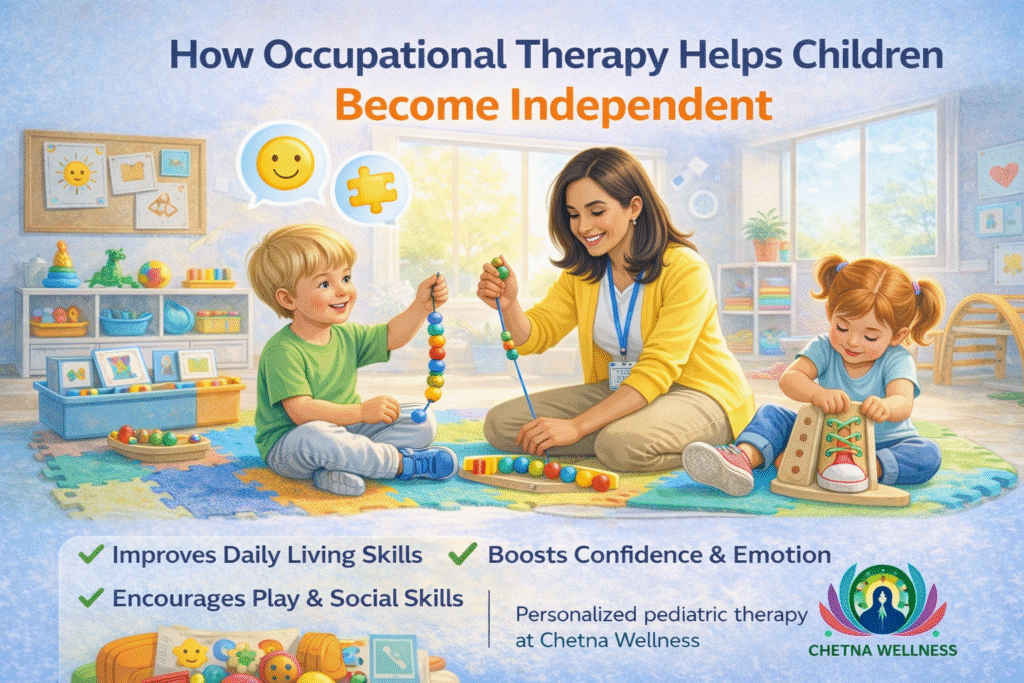
All parents want to watch their children become self-assured and self-reliant people. But some children find such everyday tasks as getting dressed, eating, writing or playing with others difficult to manage. And that’s where Occupational Therapy (OT) makes all the difference. Occupational Therapy in Ghaziabad enables children to acquire or regain the necessary skills to complete daily tasks and enhance their quality of life by increasing their level of independence.
In centres such as Chetna Wellness, children and parents are engaged by occupational therapists in playful, non-threatening routines to develop physical, cognitive, sensory and social skills.
What Is Independence for a Child?
Independence doesn’t just mean doing things alone. For children, it means being able to:
- Dress and feed themselves
- Play and interact with other children
- Participate in school activities
- Follow routines at home
- Express their needs and emotions
When children struggle with these skills, they may feel frustrated or dependent on others. Occupational therapy helps bridge this gap.
How Occupational Therapy Builds Independence
1️⃣ Improving Fine Motor Skills
Fine motor skills involve small muscle movements in the hands and fingers. These skills are needed for:
- Holding a pencil
- Buttoning clothes
- Using scissors
- Tying shoelaces
Occupational therapists use fun activities like drawing, puzzles, clay play, and bead threading to strengthen hand muscles and coordination. As these skills improve, children become more independent in school and self-care tasks.
2️⃣ Developing Self-Care Skills
Daily activities like brushing teeth, combing hair, dressing, and eating are essential for independence. Some children find these tasks difficult due to weak coordination or planning difficulties.
OT helps by breaking tasks into small, easy steps and practicing them regularly. Over time, children gain confidence and learn to take care of themselves with less help.
3️⃣ Enhancing Sensory Processing
Some children are over-sensitive or under-sensitive to sounds, touch, movement, or light. This can make daily life overwhelming and affect their behavior.
Occupational therapy includes sensory integration activities such as swinging, jumping, textured play, and deep pressure exercises. These help children regulate their responses and feel more comfortable in different environments like home and school.
4️⃣ Improving Attention and Focus
Independence also requires the ability to sit, focus, and complete tasks. Children with attention difficulties may struggle in classrooms or during daily routines.
OT sessions include structured play, movement breaks, and task-based activities that gradually improve concentration, patience, and task completion skills.
5️⃣ Building Social and Play Skills
Play is a child’s main occupation. Through guided play, occupational therapists teach:
- Turn-taking
- Sharing
- Following rules
- Understanding emotions
These skills help children make friends and participate more confidently in group activities.
6️⃣ Boosting Confidence and Emotional Growth
When children learn to do things on their own, their confidence naturally increases. They feel proud of their achievements, which encourages them to try new things. Occupational therapy supports emotional growth by celebrating small successes and reducing frustration.
Role of Parents in Building Independence
Occupational therapy works best when parents are involved. Therapists guide parents with simple home activities and routines to practice daily. Consistency at home helps children progress faster and apply their skills in real life.
Why Early Occupational Therapy Matters
The earlier a child receives support, the easier it is to develop essential life skills. Early intervention helps children become more independent before academic and social demands increase.
Centres like Chetna Wellness provide personalized occupational therapy programs that focus on each child’s strengths and challenges, ensuring steady progress toward independence.
What do I do? Occupational Therapy in Ghaziabad | Occupational Therapist empowers children to play and participate in life with confidence. From self-care and day-to-day school work to interacting with friends, OT gives children the skills they need to lead more independent, meaningful lives. Because of the right help, patience and practise every child can inch closer to independence.
❓ FAQs
Q1: At what age can a child start occupational therapy?
Children can start occupational therapy as early as toddler age if developmental delays or difficulties are noticed.
Q2: How long does occupational therapy take to show results?
Progress depends on the child’s needs, but regular sessions and home practice usually show improvement within a few months.
Q3: Is occupational therapy only for children with disabilities?
No, OT helps any child who has difficulty with daily activities, attention, coordination, or sensory issues.
Q4: How can parents support OT at home?
Parents can follow therapist suggestions, create routines, and encourage practice of self-care and play skills daily.